

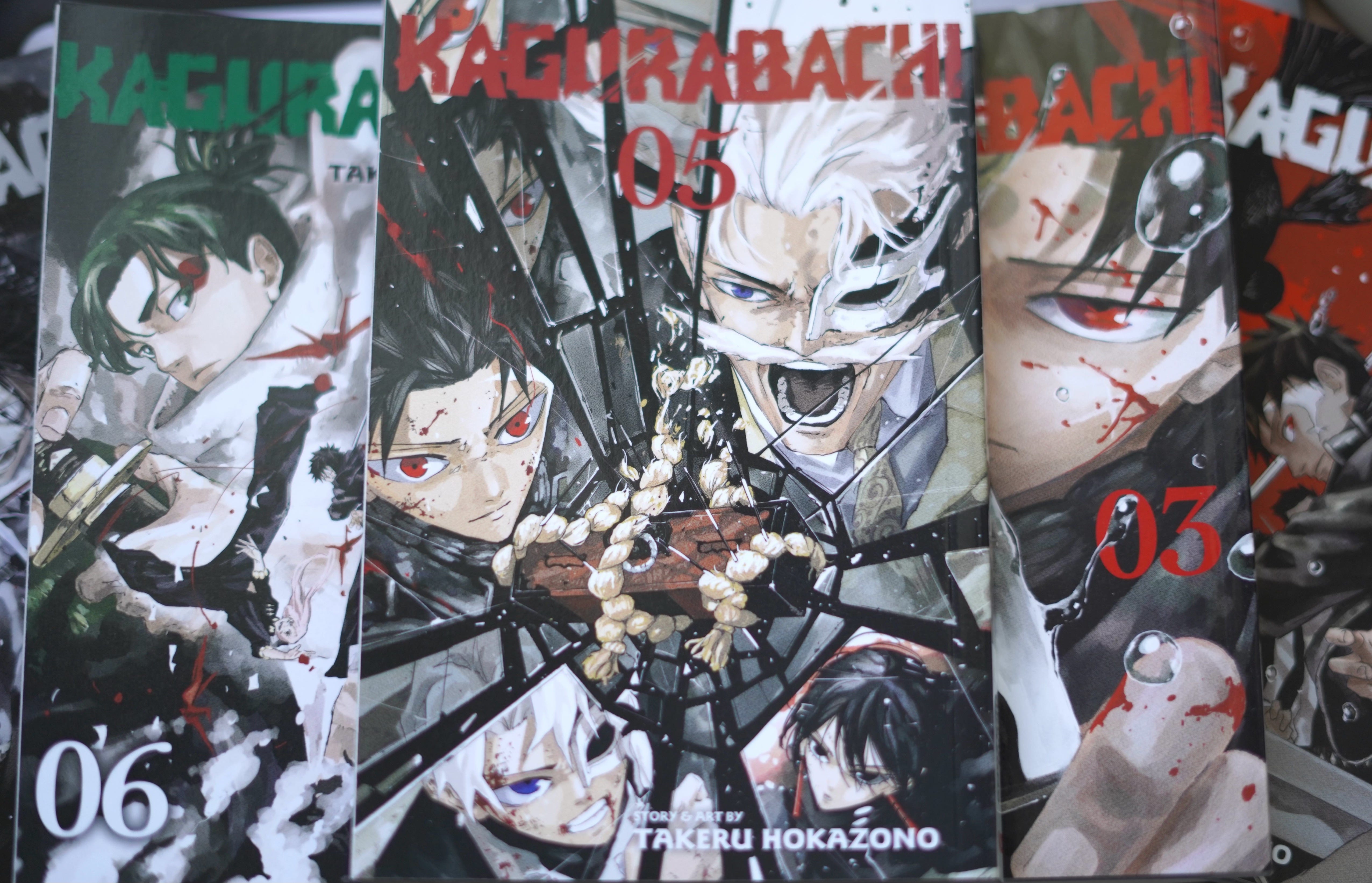
I always thought katanas are super cool. I like its design much more than the Western or European swords I was used to seeing in films and museums as a kid. Katanas also feature in one of my all-time favourite trilogies – The Matrix – as well as another famous masterpiece you might know – Kill Bill. So, when I was browsing in a Copenhagen comic book store, I had to pick up and examine a manga featuring several katana-wielding men (in suits) attacking another katana-wielding guy (in a long black coat) on the cover. Though this was not the manga I wanted to purchase that day, it ended up becoming one of my favourites…
Let’s talk about Kagurabachi.
Enchanted blades, revenge and sorcery
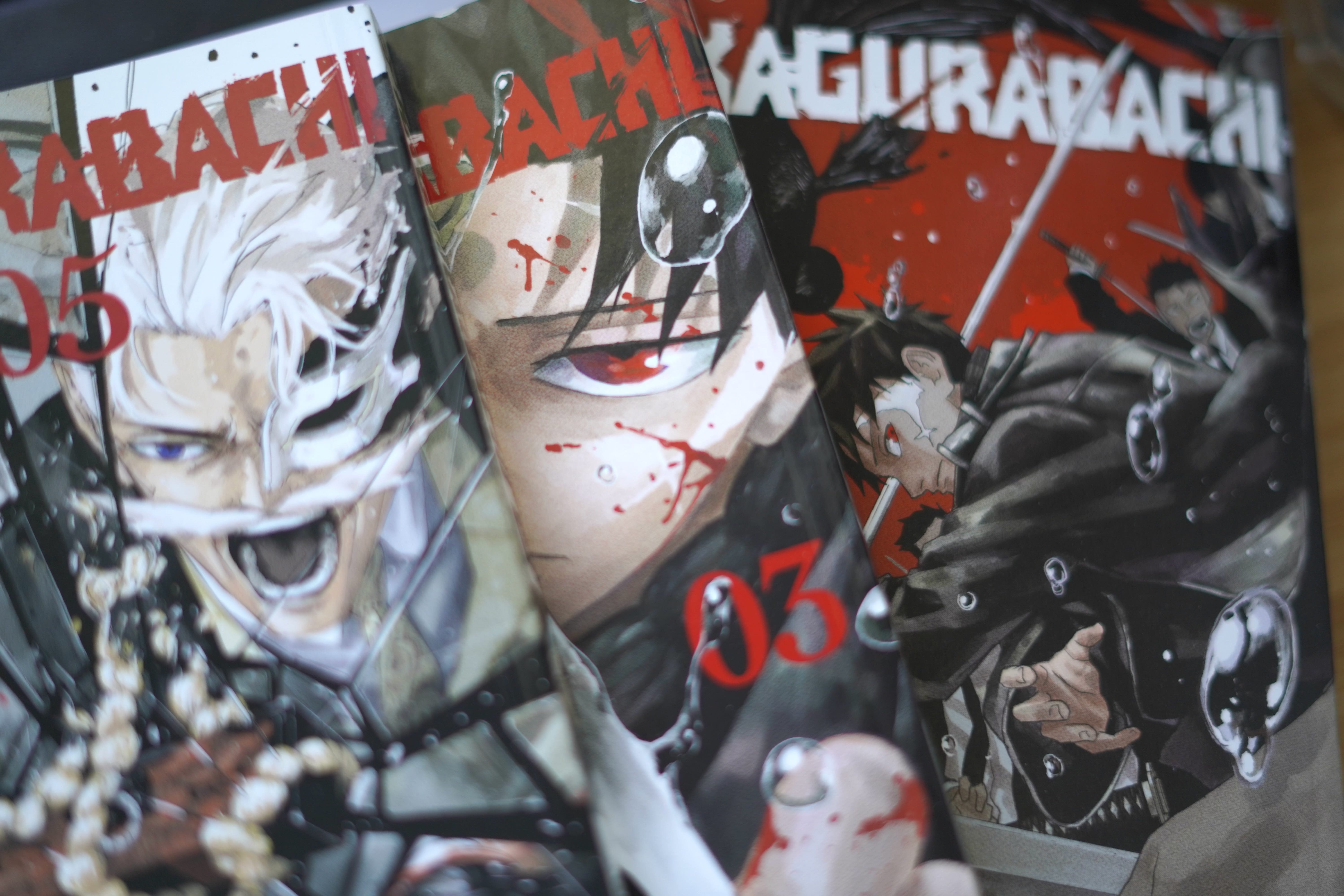
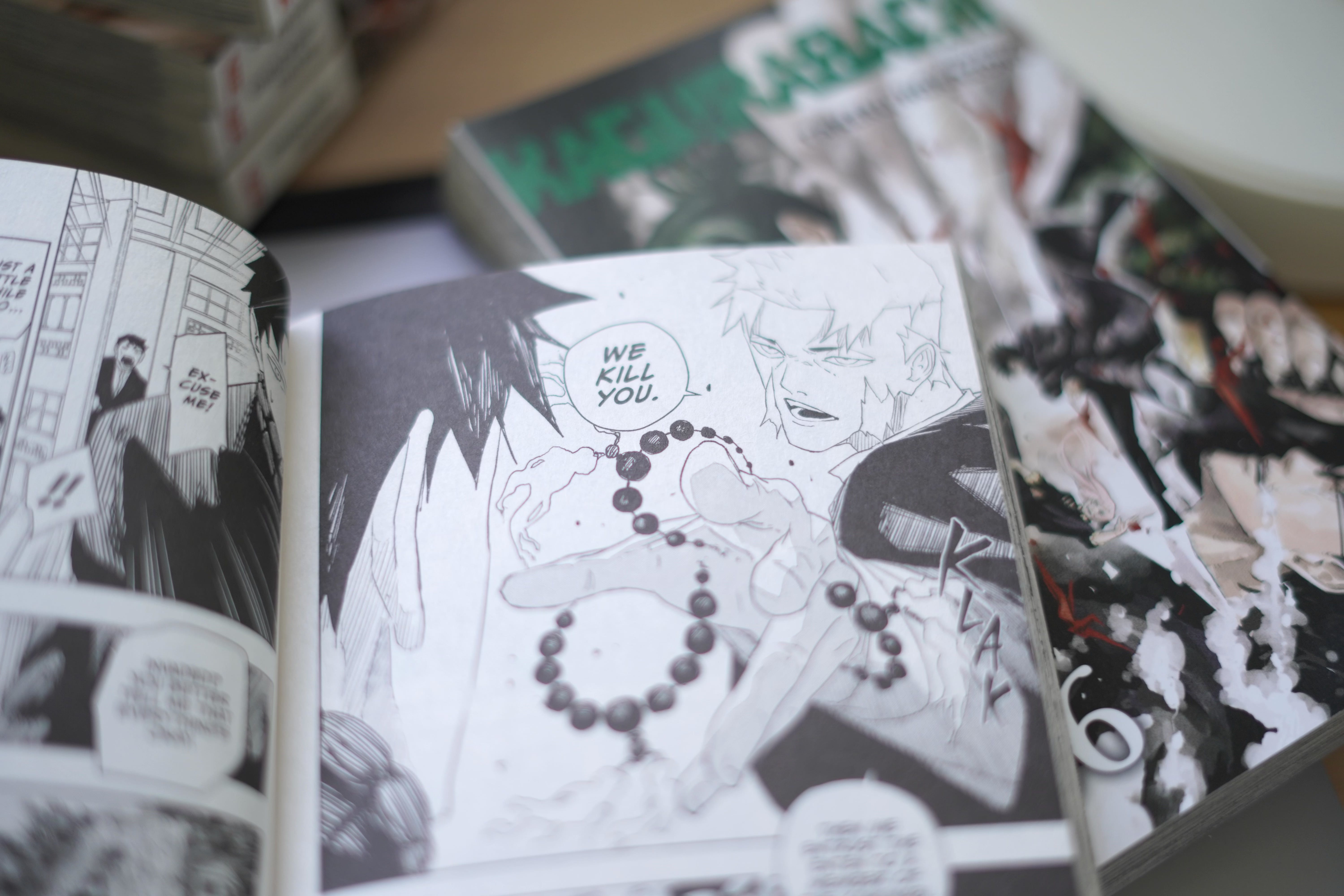
Revenge – that’s the basic driver of the plot, but it gets more complex than that. I don’t want to spoil much, but I’ll give you the premise: a few years ago, a war between sorcerers revealed to the world that magic is real; the war was ended by 6 warriors who wielded enchanted katanas that gave them special powers. After the war, a secret group of sorcerers murdered renowned swordsmith Kunishige Rokuhira and stole the enchanted blades he had forged. His son, Chihiro, survived the attack and swore revenge. Three years later, Chihiro wields the seventh and final blade — the one his father created specifically for him — as he hunts down the killers known as the Hishaku and uncovers the secrets behind these legendary weapons and the nature of sorcery.
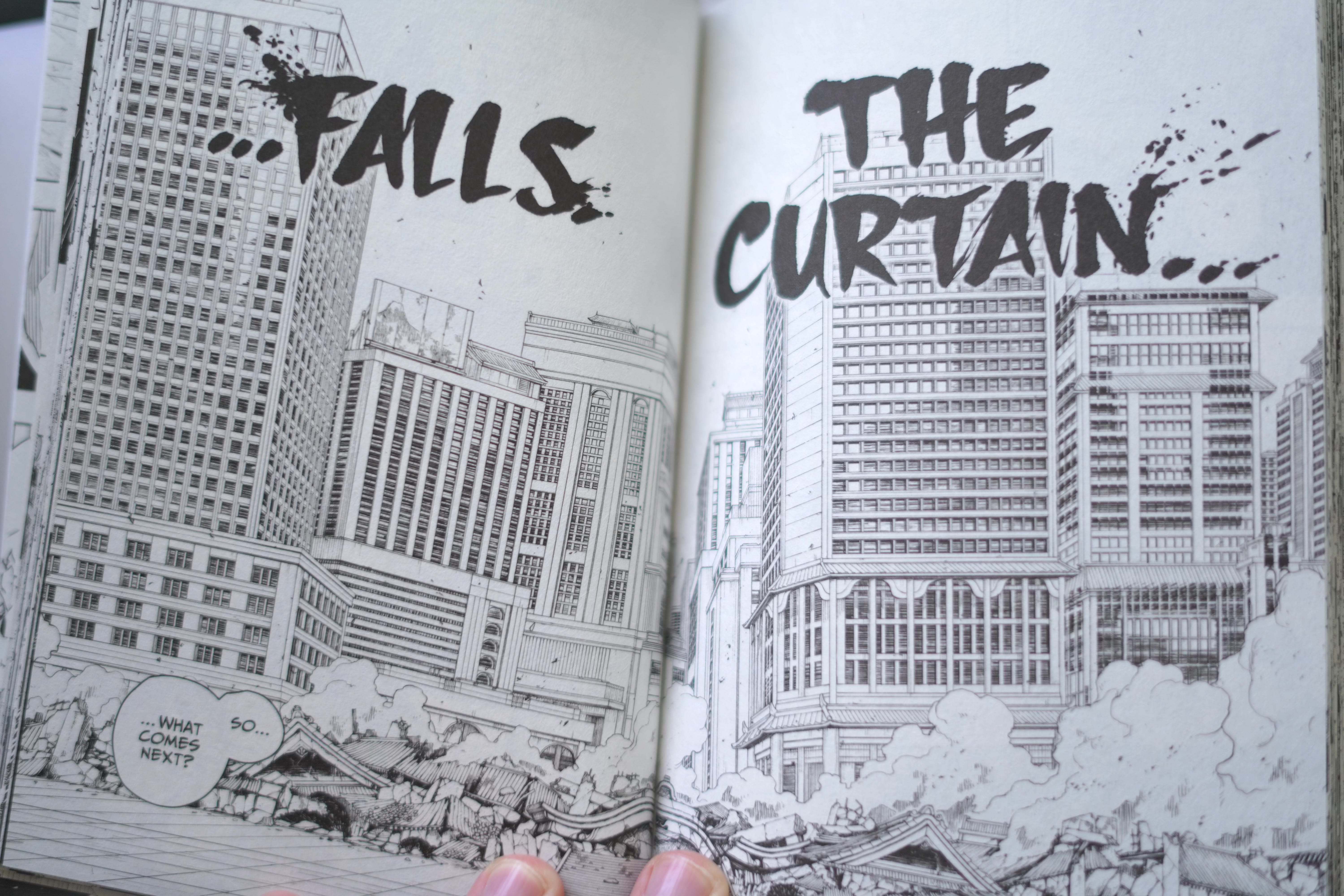
The story is set in an alternate modern Japan with flip phones, bullet-trains and cars from different decades of the 20th century. There are skyscrapers as well, which is also pretty cool. So what makes this series special, why do I think you need to read it?
Let’s start with the magic system: it’s quite fascinating and you learn more and more about it as the story unfolds. I especially love the idea of the enchanted blades, which are the most powerful weapons in Kagurabachi. Like with sorcery, the creator doesn’t reveal much at the start, but keeps dripping exciting new bits of information as we progress in the series. I’ve read 7 volumes and there’s still so much I don’t know about these magical katanas.
Crazy dynamic art
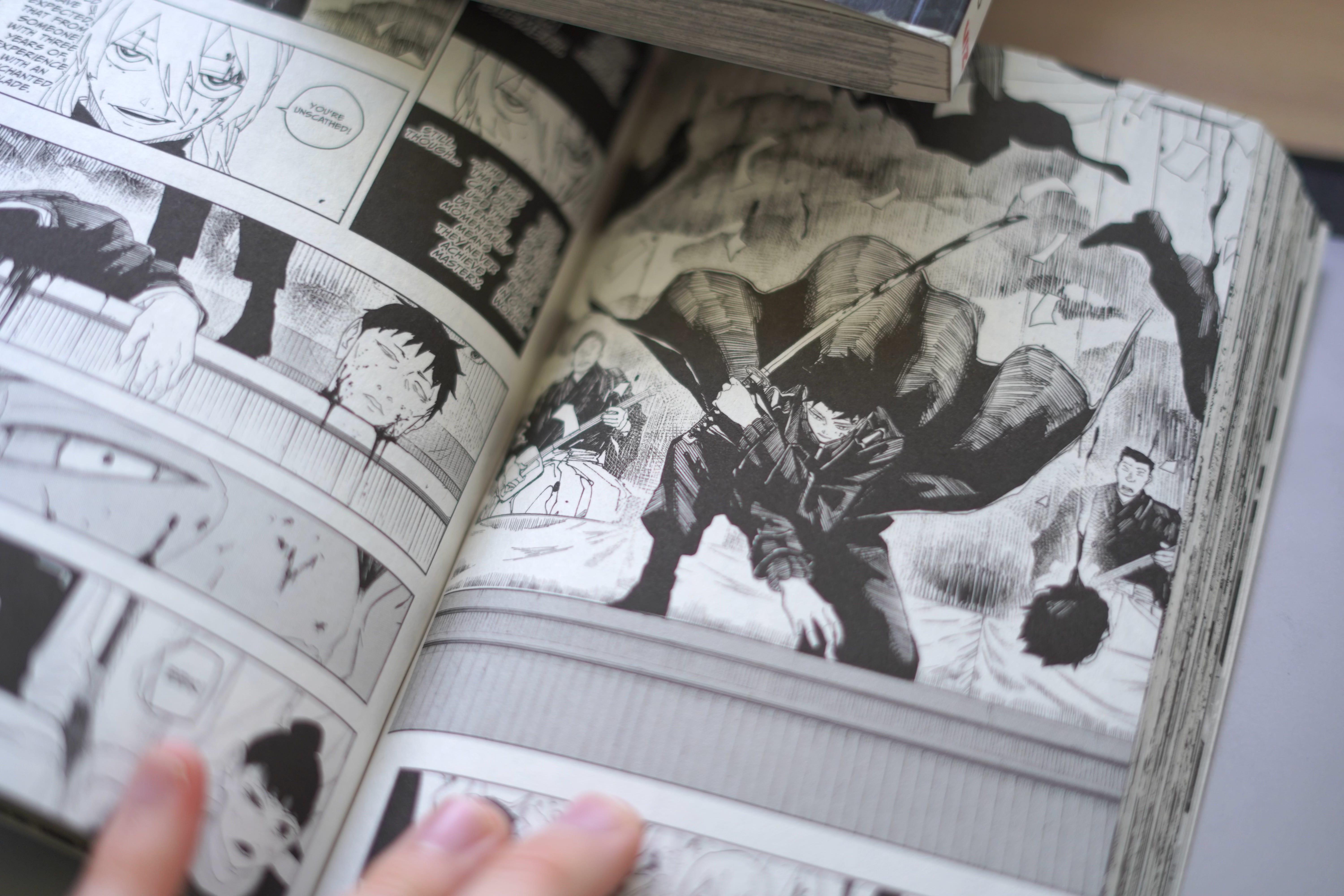
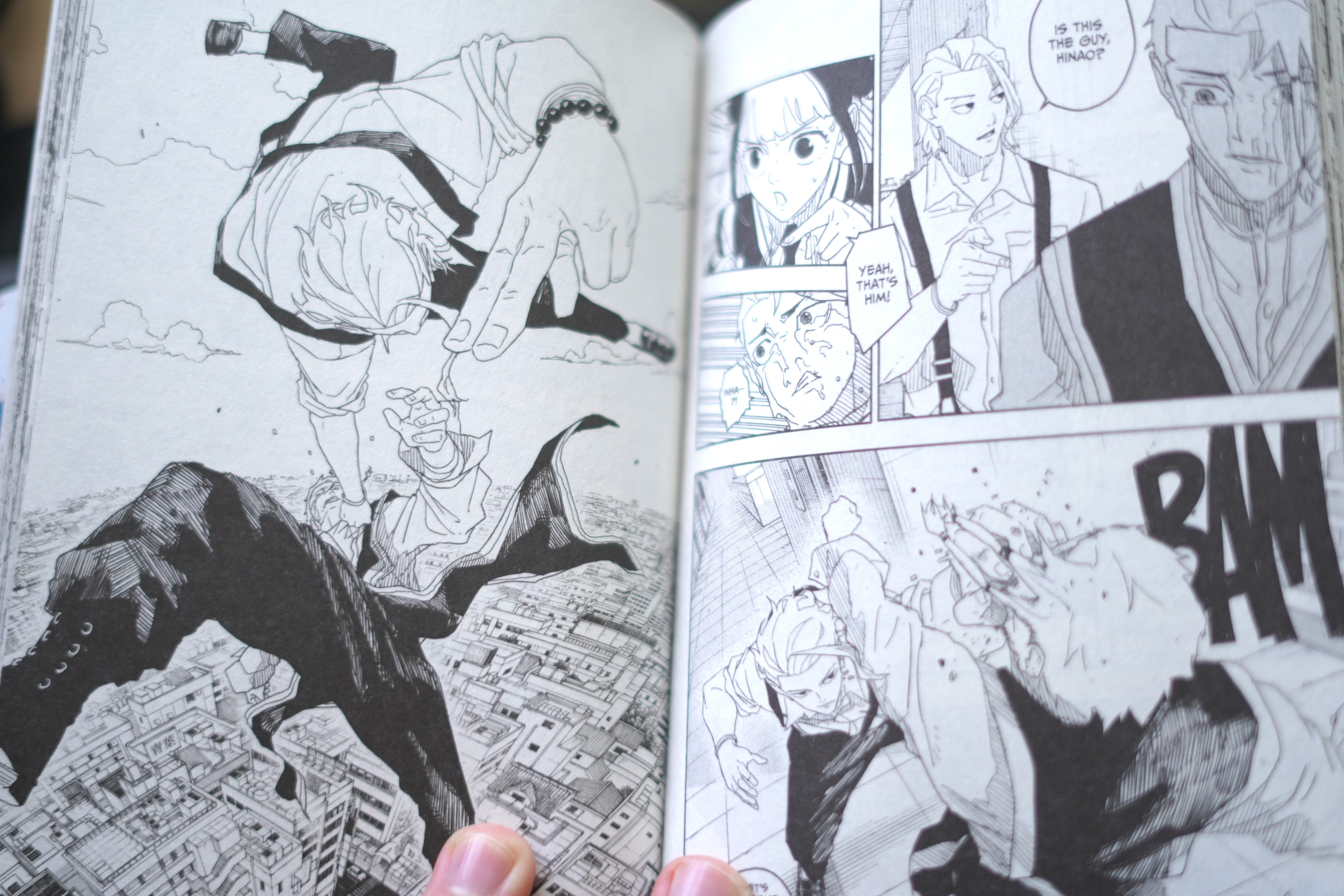
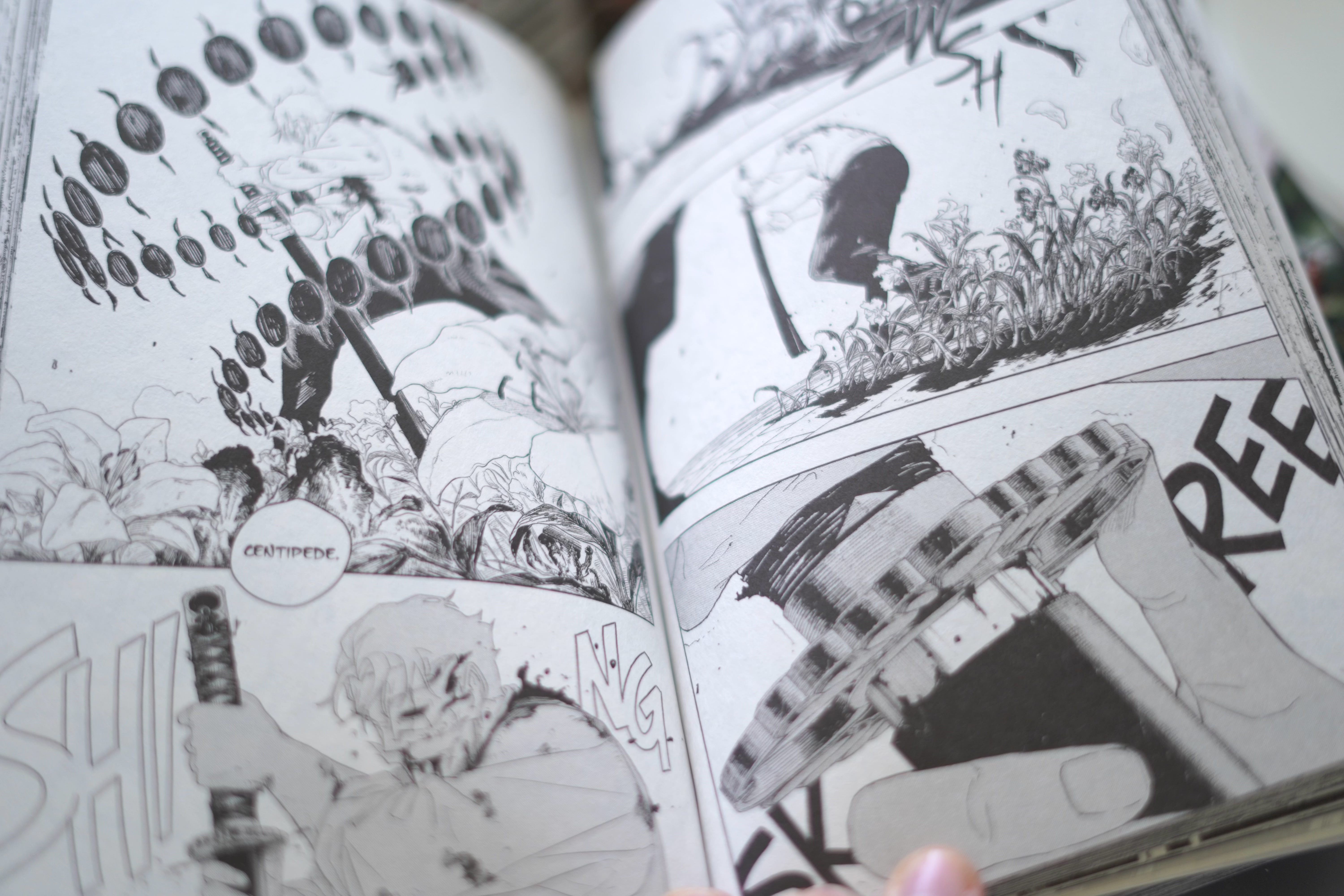
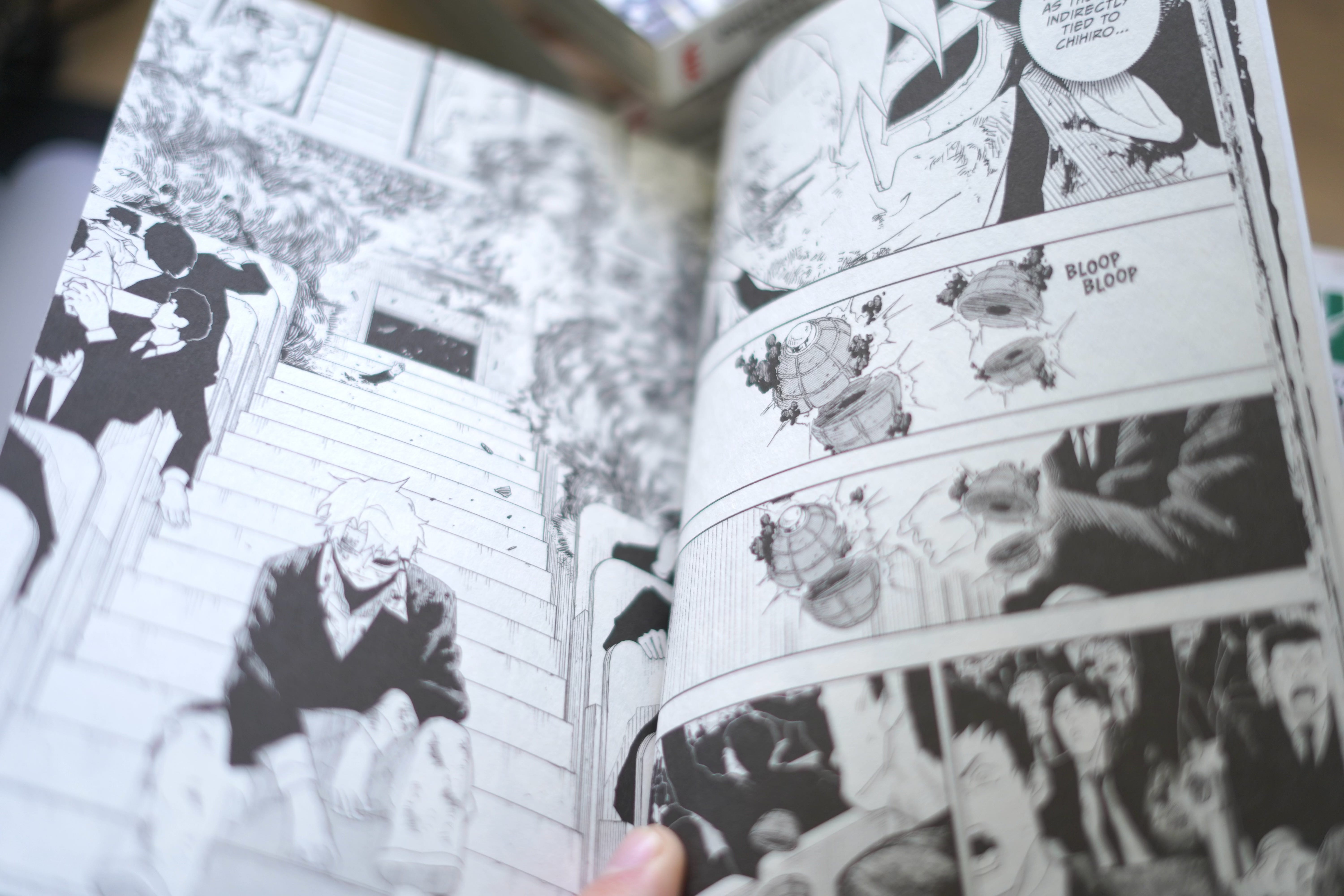
The art of Kagurabachi is crazy dynamic. If you liked Naruto, you’ll probably enjoy looking at Takeru Hokazono’s panels. In fact, Naruto was one of his big inspirations, alongside movies like Kill Bill and John Wick – I think Kagurabachi already outdid the latter. Hokazono doesn’t take the lazy path: his backgrounds are detailed and the sword action is easy to follow and very well orchestrated.
I also appreciate that he doesn’t break the serious tone of the story with chibi heads and slapstick comedy, like so many other manga creators do. There are some funny moments every now and then, but they feel organic and realistic, not out of place.
Dignified characters
That brings me to the demeanour of the characters in Kagurabachi. It was like a breath of fresh air to see so many characters who have integrity and who act in truly noble ways. Friendships in Kagurabachi don’t involve degrading each other for laughs, but real support, trust and respect. Bullies are not considered heroes here, like in other series – such as My Hero Academia (khm, Bakugo, khm) – and there are no characters who constantly make complete fools of themselves so others can make fun of them. Even the bad guys are often quite dignified in this series.
It was also refreshing to read a manga that isn’t full of female characters with huge breasts and miniskirts. Don’t get me wrong, I’m not against attractive female characters, but I enjoyed reading a series that is a bit more modest in its portrayal of women – readers should have these options too.
Talk of women reminds me of another point I wanted to make: romance, love and sex are not central to the plot of Kagurabachi (so far, at least). The stoic main character, Chihiro, has no love interests and is focused entirely on revenge, which is quite realistic, given that his father was brutally murdered in front of him a few years ago.
Overall, the story is well-paced and is full of twists and turns, so you’ll never be bored reading it.
Who is Takeru Hokazono?
As a kid, Takeru Hokazono dreamed of becoming a professional manga artist, inspired mainly by the famous series Naruto. He studied at an art university and majored in product design before dropping out to pursue a career in the manga industry – his parents actually supported this decision. Hokazono has said that he feels he needs to succeed for the sake of his parents, who kindly approved of his desire to follow his dreams.
Hokazono is only 25 years old and Kagurabachi is his first serialised manga. Prior to Kagurabachi, he gained some recognition when he submitted a one-shot called Enten to the Tezuka Award. Enten was eventually published in Jump Giga magazine in April 2021. He wrote and drew four more one-shots before he began working on Kagurabachi, which started serialisation on September 19, 2023.
Like many other mangaka, Hokazono holds a low-profile. His name is real and he shows up to Q&A sessions and live drawing events sometimes, but he always wears a mask – no one knows what his face looks like (except for the people who actually know him, of course). His editor described him as a very kind and dedicated young man, which seems to come through in his characters as well.
If you’re a big manga fan, you probably know that deadlines can be brutal, especially in weekly magazines like Shonen Jump. Mangaka have to finish writing and drawing 19 pages per week, often working 14+ hours a day. This has led to some illnesses and necessary breaks for Takeru Hokazono, but Kagurabachi is still going strong. The series will be on a short summer hiatus from June 29 to sometime in August, when it’ll resume the regular release schedule.
Where should I start reading?
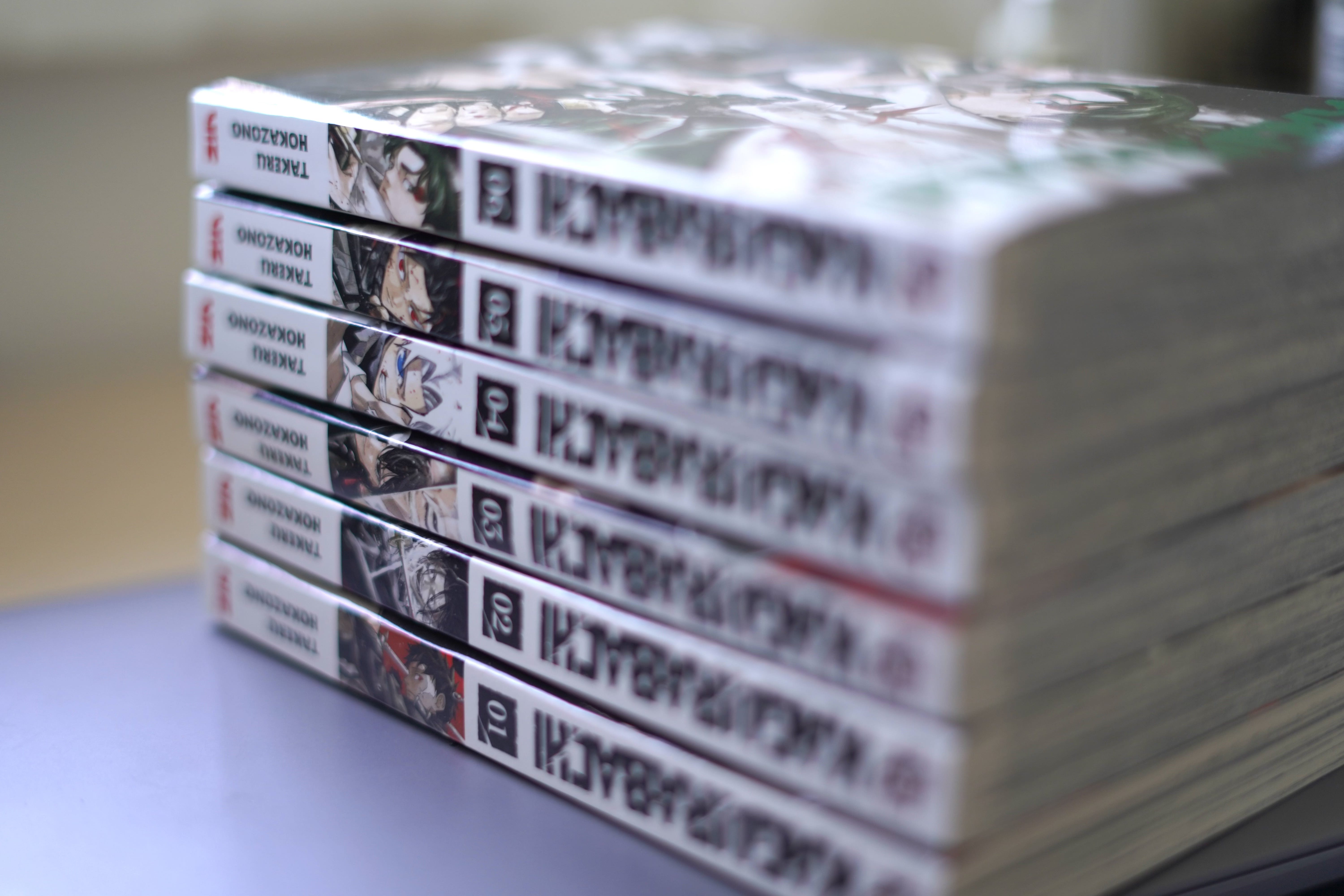
If you’re not familiar with the manga world, you might be wondering how you should start following Hokazono’s cool urban fantasy. There are 7 published volumes in English (11 in Japanese) thus far – if you’d prefer reading a physical copy.
Kagurabachi is also available on the official Manga Plus app (made by Shueisha) and the also official Shonen Jump app (by VIZ Media). If you’re in Europe, the App Store and Google Play Store will only have Manga Plus, but you can also download the Shonen Jump app by finding its APK file online (only an option for Android users though).
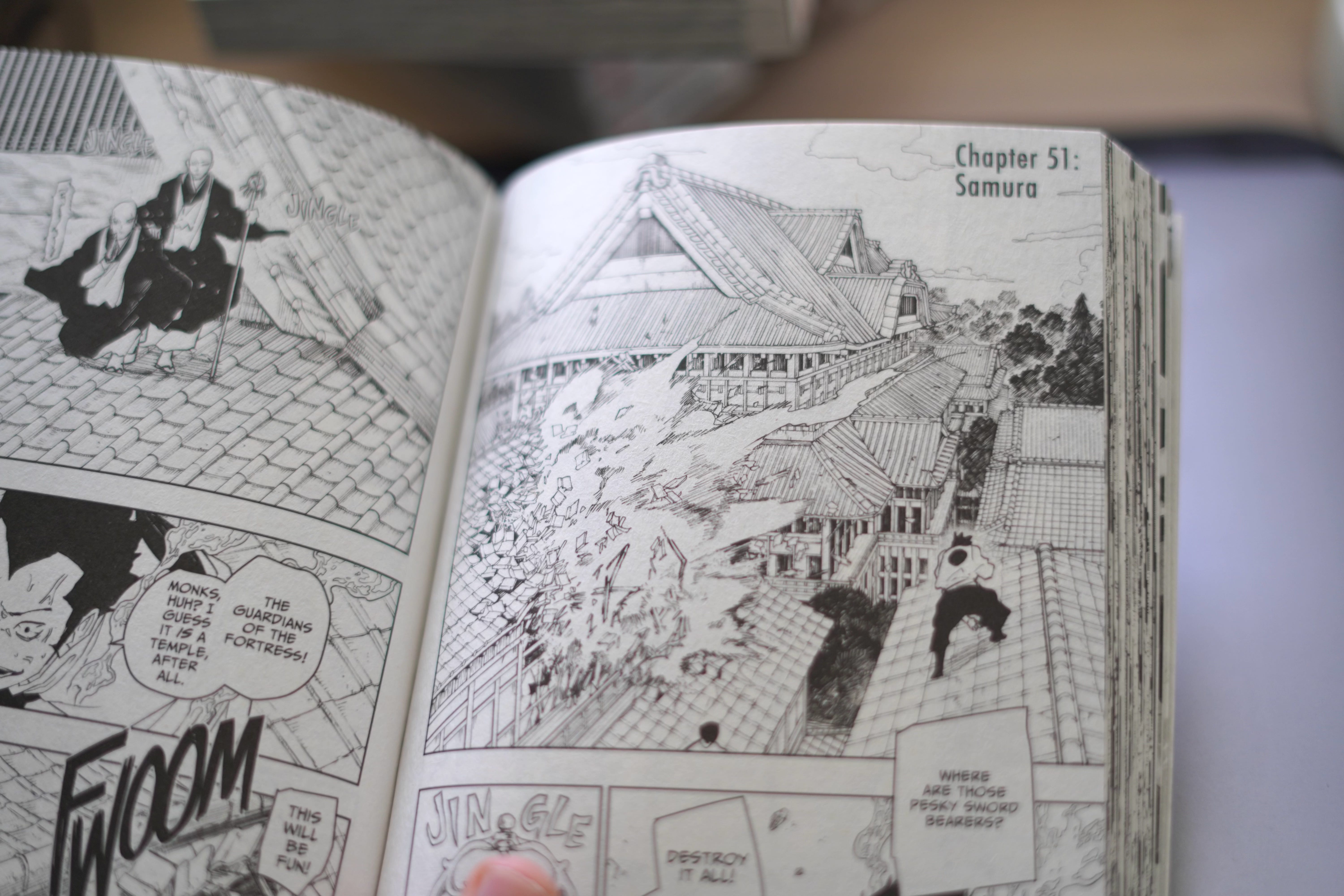
The Manga Plus app allows you to open and read all chapters for free once – if you close it and want to open it again, you need to subscribe. This app only works if you have internet connection, whereas the Shonen Jump app let’s you download chapters locally on your device. Luckily, both subscriptions are super cheap: $2/month for the Manga Plus standard plan, $5 for the deluxe plan and $4/month for the Shonen Jump app.
What’s very cool about these apps is that the latest chapters are released in English simultaneously with the Japanese versions – you need not wait months for an English translation to drop.
Well, thanks for reading this review! Remember, my opinions apply to the first 7 volumes – I haven’t gotten much farther yet. Make sure to leave a comment and let me know: have you read Kagurabachi? If so, where are you in the story? And what do you think about it so far?